Disclosure Day (2026)
BY MARCEL PETERSEN
June 13, 2026
Universal
Disclosure Day is Steven Spielberg’s first major return to big Sci-Fi story-telling since his 2005 remake of War of the Worlds (I won’t count Ready Player One (2018)). Can a Spielberg blockbuster still be a blockbuster? Can it still make an impact like E.T. the Extra-Terrestrial (1982) and Close Encounters of the Third Kind (1977)? This movie is not as intense as War of the Worlds, not as magical as E.T., and not as personal as Close Encounters—but it’s also an amalgamation of all of this. What has 50 years of this storytelling done for society? Have we forgotten how to watch, how to listen?
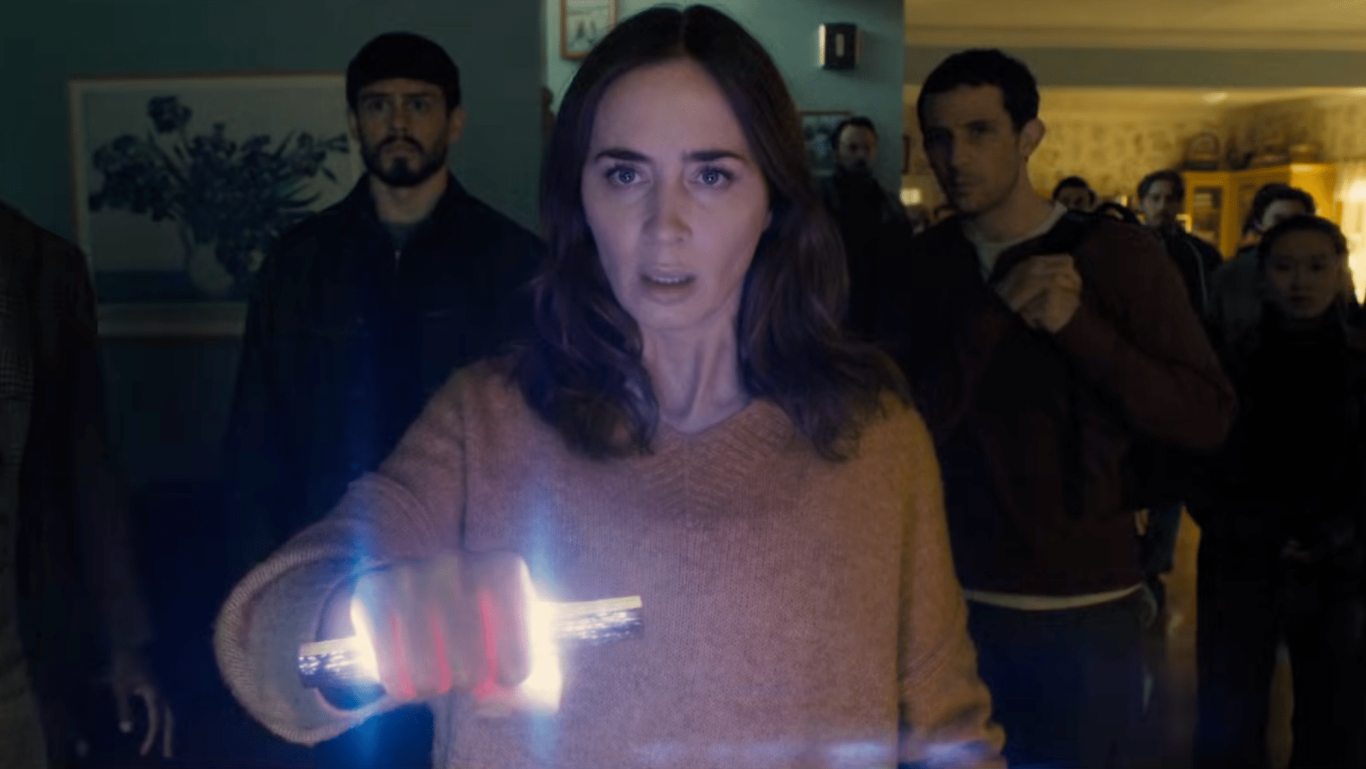
Disclosure Day follows Margaret Fairchild (Emily Blunt), a Kansas City weather reporter, who begins experiencing changes in how she can communicate with other people; Daniel Kellner (Josh O’Connor), a cyber-security expert who has stolen data from his former employer, the shadowy government-adjacent organization Wardex; Noah Scanlon (Colin Firth), the head of Wardex, intent on information suppression; and Hugo Wakefield (Colman Domingo), the head of a covert group opposed to Wardex’s goals.
The movie begins in media res, with Daniel Kellner on the run. With the help of a mysterious alien object, Daniel evades capture and is able to rescue his (former?) girlfriend, Jane Blakenship (Eve Hewson), who, we find out, was going to become a nun—and this is seemingly just for the movie to have an excuse to discuss the perhaps opposing realities of aliens and God.

Universal
Meanwhile, Margaret is also on the run, after her outburst of alien language on live TV brings Wardex’s attention to her as another target. Her boyfriend, Jackson (Wyatt Russell), tries going along with her at first, but Margaret’s new intuitive understanding is a lot to follow—not only for him, but also for the audience.
Margaret’s newly-realized intuitive communication stands in contrast with Scanlon’s telepathic linking (achieved by using the same multi-purpose alien technology that Daniel uses earlier in the movie). While Margaret uses her abilities to create understanding between people, Scanlon intends to control people so he can achieve his goal of suppressing information. Any technology can be used to control rather than to share and communicate—whether that’s an alien rod or, say, social media.
Disclosure Day asks questions about alien contact, doesn’t explore them too deeply, but does ask us to think about them. The movie instead focuses on the conflict between those that intend to suppress information and those that want to share it. For the most part this works well in the movie. Frustratingly, though, the finale includes constant reporter commentary telling us how interesting and awe-inspiring what we’re seeing is, instead of letting the images speak for themselves.
Disclosure Day examines alien contact and humanity’s relationship with it—but also our relationship with each other. Have we stopped wondering, caring, listening? What would it take to get everyone to think about the same issue? What does it take to truly understand other people? We’re fractured as a society, both as a country and the world at large. Would incontrovertible proof of alien contact change any of this? Would it inspire greater understanding and wonder, or just more fear and suppression? The choice is up to us.
RATING: 3.5 out of 5 stars