Teenage Sex and Death at Camp Miasma (2026)
BY MARCEL PETERSEN
August 25, 2026
MUBI
The slasher genre is beyond played out. Sure, we get a decent one once in a while (I thought Heart Eyes (2025) was pretty fun!), but even when it’s good, it’s usually still riffing on something we’ve already seen. With a few decades now of slasher movies behind us, there’s been plenty of time for discourse around these movies.
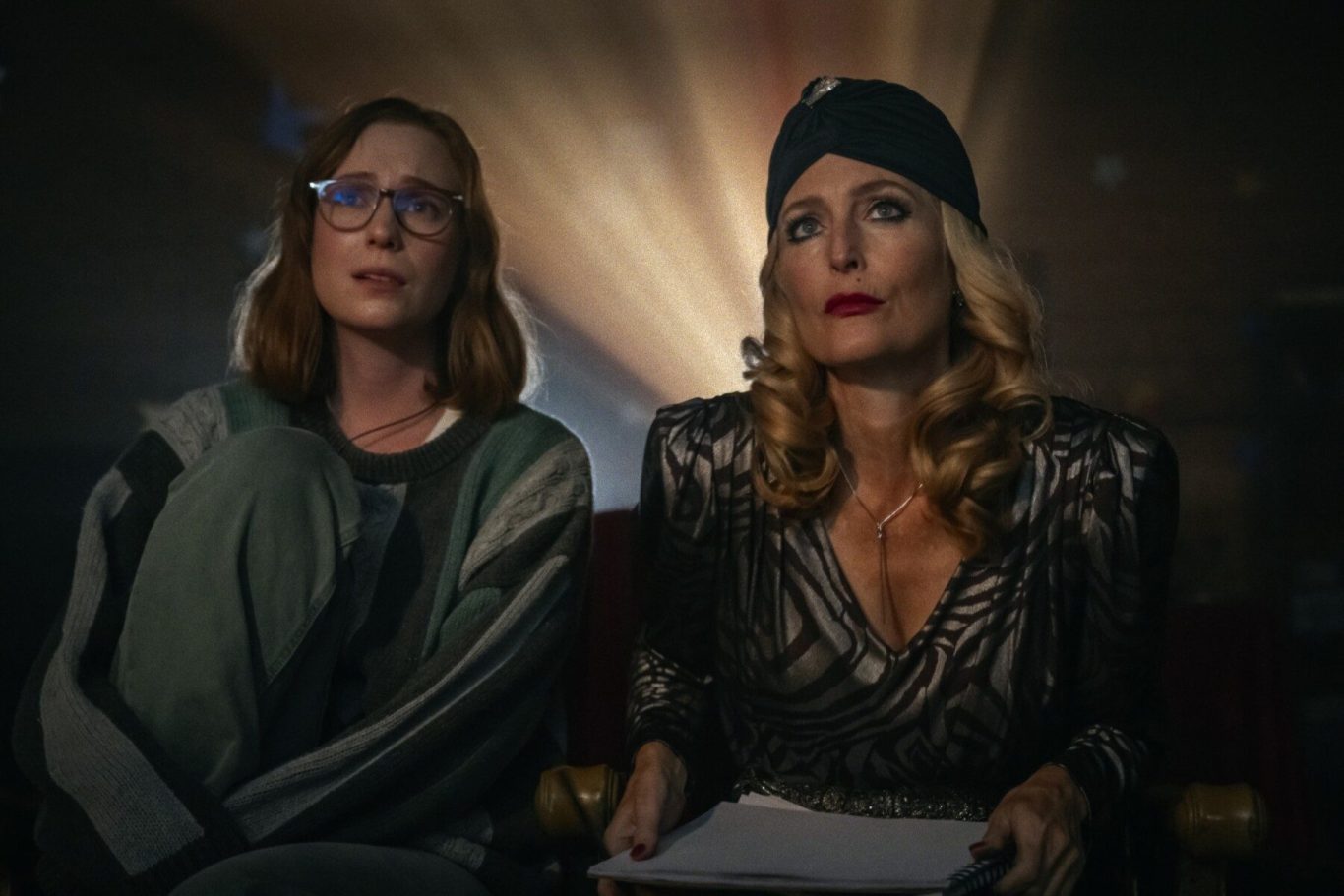
In Teenage Sex and Death at Camp Miasma, this is the problem for Kris (Hannah Einbinder, of Hacks (2021-2026) fame), a promising young director set to reboot the “Camp Miasma” film franchise. It’s her intention to feature the original final girl, who was portrayed by the now older and reclusive actress Billy Presley (Gillian Anderson), à la Gloria Swanson’s character in Sunset Boulevard (1950)—so, in hopes of convincing her to join the project, Kris sets out to visit Billy, who lives in a remote pacific northwestern town in a cabin on the site where the original film was shot.
As Billy and Kris get to know each other, they both share their experiences with “Camp Miasma”—Billy having been part of making (the original film) and Kris having been a life-long fan and now with the job of reviving the “zombie IP”—long dead and waiting to be resuscitated by the right director (a cool young queer director like Kris to make people forget about the more problematic elements of the franchise).
Kris clearly loves the “Camp Miasma” franchise, despite its problematic elements (she buys a Camp Miasma 6 (if I’m not mistaken) DVD from the gas station, and then when she gets to her hotel, has the hotel concierge dust off a DVD player so she can use it in her room—one of my favorite scenes in the movie).
MUBI
And this underscores one of the many themes of Teenage Sex and Death at Camp Miasma: on the one hand, we can consider authorship and artist intention when looking at these slashers of yore. What message did the writer/director/artist intend to communicate? But, perhaps more importantly, how do we engage with the art, and what does it mean to us?
The perfect example is Sleepaway Camp (1983), which is an important text for this film (and will now be briefly summarized and spoiled here for the purpose of this review). Sleepaway Camp centers on a young girl Angela, who goes away to (you guessed it) a sleepaway camp. The camp is full of mean kids, uncaring instructors, and negligent and predatory staff. A series of deaths start happening, and the camp owner tries to keep things running as normal. It’s eventually revealed that young Angela is the killer in a final jump scare of Angela’s naked body, showing that she is transgender (and it’s related that being a girl was seemingly forced upon her by her adoptive parents). This is concerning on multiple levels. The film intends to scare us with this final shot, insisting disgust and revulsion for Angela’s body, posing her as a monstrous figure. Additionally, there’s a toxic narrative here of queer people as mentally disturbed and also dangerous for society, forcing their “unnatural” “lifestyle” upon their children and others.
But the film also has gained a cult following, even from trans people. Part of this cult following may be due to a lack of representation period, so even "bad" representation is at least something. Angela’s plight is also ultimately pretty relatable: she’s shut within herself, afraid to be with other kids—a social outcast. The horror film can go there—it can take us to parts of society that people are afraid to talk about, or that they may not even know about. Can we fairly interpret Angela as the film’s intended hero? I don’t think so, but Angela is still the hero for the outcasts, for the trans kids, for anyone who has been othered by cisgender heterosexual society.
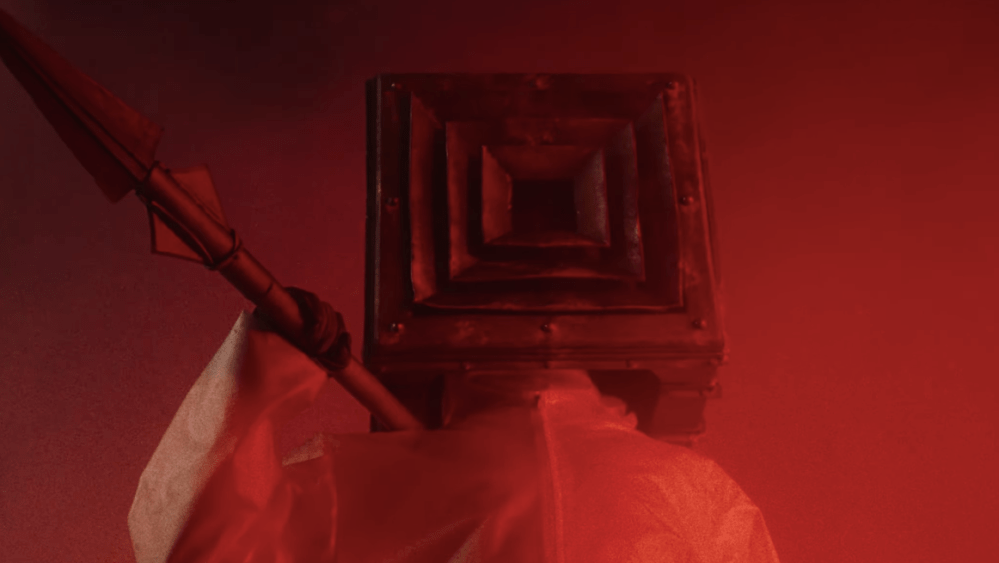
Teenage Sex and Death at Camp Miasma is obviously a tongue-in-cheek title, as is the name of the masked killer who torments the campers, “Little Death” (Jack Haven) (or as the French say, la petite mort, the “little death” sensation post-orgasm)—a combination of Angela (Sleepaway Camp), Jason Vorhees (Friday the 13th franchise), and (visually, at least) Pyramid Head (Silent Hill).
TSDCM is also in conversation with writer/director Jane Schoenbrun’s previous two films. On the one hand it’s more of the same—closed off protagonist, Alex G soundtrack, dream-like visuals, discussions of the self and media—but it also feels like Jane is breaking new ground. Tonally TSDCM is much sillier than their previous work, and, for my taste, all the better for it.
Teenage Sex and Death at Camp Miasma bites off a lot, and I’m curious how people will react to it who haven’t seen some of the media this assumes as background knowledge. Ultimately, though, I think the film is about embracing pleasure—whether that’s a sexual fantasy, fried chicken and dipping sauce, popcorn and candy, or a problematic horror film (or some of that all together).
RATING: 4 out of 5 stars